About Me
- Jill
- Hello and welcome to my nature writing blog. My name is Jill Stanton-Huxton and I am a freelance writer with a passion for the natural world. I am a volunteer and member of the RSPB (Royal Society for the Protection of Birds), World Wildlife Fund, British Hedgehog Preservation Society, UK Butterfly Conservation, Tiggywinkles Wildlife Hosptial and BBONT (UK Wildlife Trusts). Please feel free to comment on my posts and if you’ve enjoyed your visit please come again! You can also find me on my facebook page: Nature Notes of a Country Girl. Best wishes, Jill
Friday, 9 December 2016
Snowdrop
Did you know the snowdrop (Galanthus nivalis) is a member of the daffodil family. It is often abundant in woods, hedges, stream-sides and churchyards in late winter. Evidence suggests that it is an ancient introduction frequently associated with both pagan and christian sites and is the symbolic flower of the feast of Candlemas.
My winter Snowdrop Haiku:
Sturdy, sweet scented
Galanthophiles delight
The winter gala
Wednesday, 6 January 2016
The Private Life of an English Field - Meadowland
I’ve recently read this beautiful book by the writer and
farmer, John Lewis-Stempel. It won the Wainwright Prize for 2015.
The book is about the passing months and seasons of an
ancient meadow (on the edge of Wales )
with all its wildlife. It brought back memories of my own carefree childhood,
growing up in an English country village in the 1970’s. Days were spent
playing in haystacked fields during the long, lazy days of summer and down
country lanes, where hedgerows were bursting with blackberries, in the autumn.
To quote John Lewis-Stempel “it’s the sort of field where,
as you step in, you breathe out.” A mountain river runs along the eastern edge
of the field and two oaks, with elephant trunk thick roots (around 700 years
old) remain as evidence of when the land was wooded. A kingfisher flies along
the river, never deviating from its course, a small copse is home to foxes, a
pair of ravens roost in nearby trees, rabbits graze near their warrens and the
old boar badger (with his dragging back leg) patrols his territory.
One year he decides to let the meadow ‘go’, instead of
moving livestock around in it. As a result, in late June the meadow is bursting
with wildflowers and he realises that, once upon a time, it would have been a
hay meadow. Sadly, 97% of traditional meadows have now disappeared due to
intensively managed farmland.
When it is ready to be mown, he decides to do it the old
fashioned way – with a scythe. However, he notices the curlew and meadow pipit
are still on their nests, and so as not to disturb them, he mows around them –
leaving them ‘afloat’ on their own meadow islands.
On one beautiful Midsummer Eve he goes for a walk on the
farm and his three horses and donkey surround him like a merry-go-round. For a
few moments he wonders what they are doing – then the donkey and one of the horses
tug at his sleeve and he realises they are playing and want him to join in!
To sum it up, it’s one of those books that you remember long
after you have finished reading it – and probably like me you will want to read
it again and again. So, if you just read one nature book this year, make it
this one. You won’t be disappointed, I promise!
Tuesday, 28 July 2015
If you go down to the wood today...
My husband and I went for a walk in our local wood a few
weeks ago. It was a beautiful day and as we were walking along, enjoying the
sunshine, something about the wood felt different to me. At first I wasn’t sure
what it was, then I realised that for the first time it actually felt and
looked like a ‘real’ wood.
We’ve been visiting the wood for several years now, since we
became members of the Woodland Trust. Part of our membership package included
having a tree dedicated to us. So one autumn morning we packed up our
binoculars and camera and set out to try and find ‘our new tree’. Windmill Piece wood was established by The
Woodland Trust as a ‘Millennium wood’ so at the time the trees were just
saplings with many less than six feet tall.
Over the years we’ve seen the wood gradually ‘growing up’ and
maturing through the changing seasons. In the early years we noticed some of
the saplings died over the harsh winter months and then as the remaining ones continued
to grow the trees were regularly thinned out to make more space for them. And a few years ago “ridings” were made that
run through the middle of the wood adding a further stage to its development.
Today, many of those young saplings are now over 30 feet tall
and provide a shady woodland canopy beneath their leafy branches. And on either
side of one of the “ridings” the trees branches are so long they form a natural
archway as they lean over and shake hands with their neighbours.
I don’t think it’s just us that has noticed this difference
either - so has the ‘wild world’. On recent
visits we’ve seen a green woodpecker foraging on the ground for food a pair of
Red Kites circling over the woodland canopy and heard Sky Larks singing in the
field on the edge of the wood.
Recently as a member of Butterfly Conservation we went to
the wood for a picnic and to do their Annual Butterfly Count. The count only
last fifteen minutes and amazingly during that brief amount of time I recorded
eleven types of butterflies – Large White, Small White, Green Veined White,
Marbled White, Gatekeeper, Meadow Brown, Ringlet, Speckled Wood, Painted Lady
and Small Tortoiseshell.
Oh, and as if that wasn’t enough to entice us back to the
wood during the autumn months, it now provides us with blackberries for our
apple and blackberry pies and sloe’s for our winter tipple of sloe gin.
Finally, to quote the Royal Society for the Protection of Birds recent advert - if you create a home for nature...nature will come.
Friday, 3 October 2014
The Perfumier and the Stinkhorn
Over the last few years there has been a renaissance in nature writing and, as such, an abundance of excellent books to read. As a result I’ve been unable to pass a bookshop over the last few months without popping in and seeing what they have on their shelves to tantalise my senses.
One of my favourites, which I read this summer, is the rather
wonderfully titled ‘The Perfumier and the Stinkhorn’, written by one of the UK ’s greatest
nature writers, Richard Mabey. He is the author of some thirty books, including
the beautifully written and thought provoking ‘Nature Cure’ which was shortlisted
for the Whitbread, Ondaatje and Ackerley Awards.
‘The Perfumier and the Stinkhorn’ is a pocket sized A5 book of
six short essays which explore how our sensory responses (sight, taste, smell,
touch and sound) influence our interactions with and attitudes towards nature.
His aim when writing this book was, in his own words, “to attempt to marry up
the Romantics view of the world with the meticulousness of the scientist.”
Like any great nature writing book, not only does it reawaken
the reader’s own innate passion for nature - it also leads them on new explorations
and discoveries of the natural world. To whet your appetite here are just a few
fascinating facts from the book:
The nineteenth century poet, John Clare, objected to the
oppression of living things in the name of science. He was always excited to
find new species of plant or insect but had no desire to kill the butterfly by
sticking it on a cork board with a pin. Instead he would patiently watch it
settle and then get nearer to it to see the powdered colour of its wings.
He also had a very visual take on the natural world and
insisted that other organisms had perspectives too. On his walks, he would
‘drop down’ peering closely at the earth and scribble notes on old scraps of
paper or seed packets. In his poem ‘To
the Snipe’ he pictures the snipe from its own point of view – and in doing so
captures the boggy habitat of its home.
The American poet, Gary Snyder, in his essay ‘Unnatural
Writing’ argues that ‘conventional natural history and science writing are “naively
realistic” they unquestionably view nature from the perspective of the front-mounted
bifocal human eye.’
Interestingly, in a kind of mirror image of John Clare’s
swamp, it was only in the 1980s that a group of French biologists discovered
(by looking at it from a different perspective: from above) that the top storey
of the rainforest, thought to be seen previously as just a canopy for more
important environmental business below, probably contains more than half of all
earth’s plant and animal species!
Finally, did you know that the shower of rain on dry earth
has a name? Its called ‘petrichor’ and it’s the perfumed essences from such
things as flower petals, pollens and resins that are washed into the earth and
then absorbed by porous stones and clay. When warm rain falls again this is
released back into the air and rekindles our memories of these ingredients.
Natural smells are also all part of a complex messaging
system between plant and plant and animal and plant. For example Mopane trees
in Africa (a favourite food of elephants) send
out a warning message to other trees that they are being browsed. However, elephants
are wise to this trick and eat only a few leaves from each tree then move up
wind to new trees. Colin Tudge wrote ‘we can’t hear the trees calling to each
other, but the air is abuzz with their conversations none the less, conducted
in vaporous chemistry.’
In his conclusion to this enthralling book, Richard Mabey, writes “how powerful our unassisted senses are when guided by our imagination and that science and technology can open up new perspectives, but that is our own gift to use these to change our ordinary point of view”.
So next time you go down to your local wood or park for a
walk, or pop out into the garden to do some autumn pruning, remember to ‘tune
in’ to all of your senses and see what a difference it makes – I know I will!
http://www.amazon.co.uk/The-Perfumier-Stinkhorn-Richard-Mabey/dp/1846684072
Sunday, 1 September 2013
Finca Son Jorbo, Mallorca – (A birders’ delight)
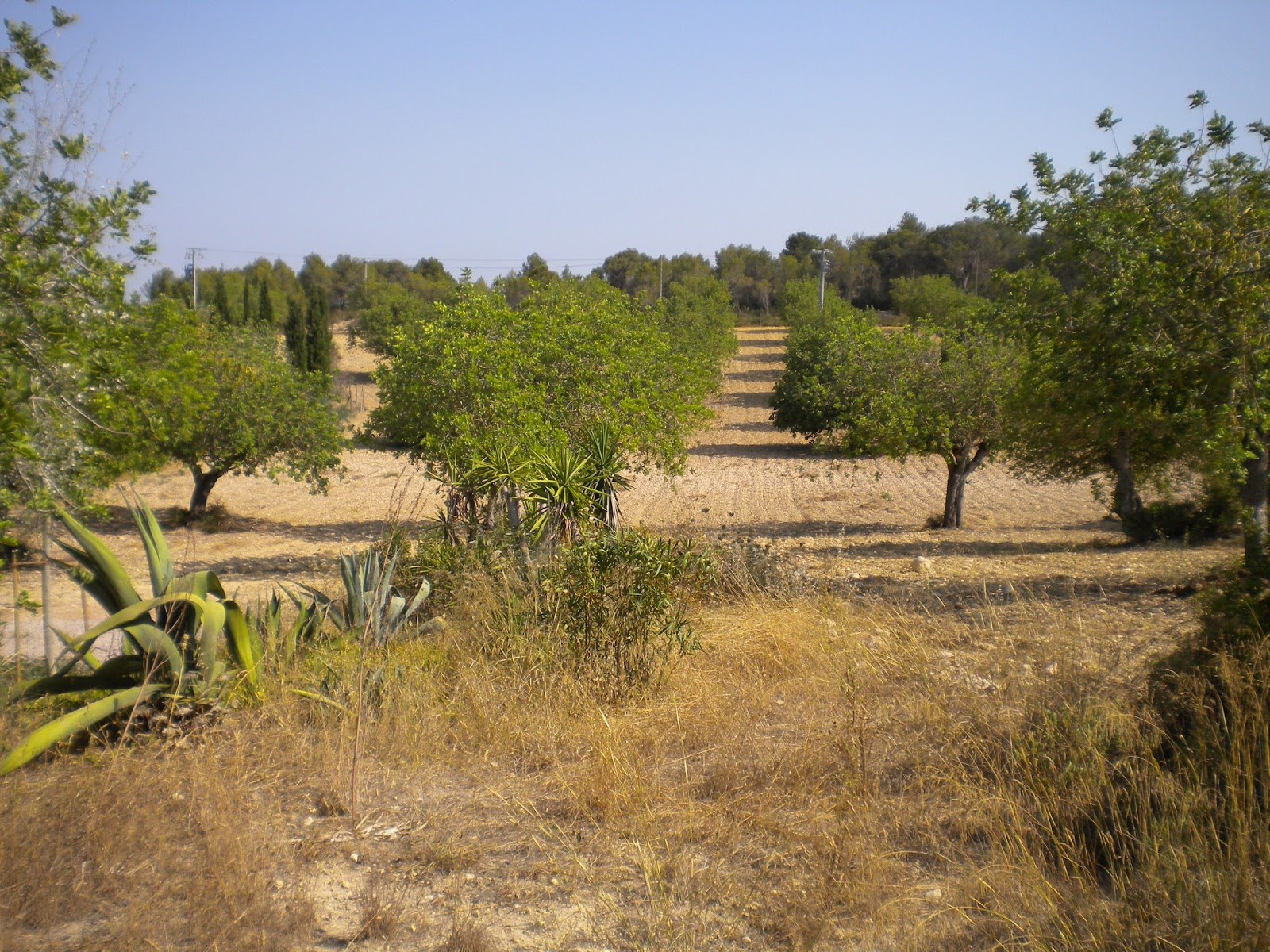
This summer we returned to the beautiful island of Mallorca
for our annual holiday. We stayed at a traditional 17th century farmhouse in a
rural location on the central plains. The converted farmhouse, which is run as
an excellent bed & breakfast by the British owners, has lovely views over
the local countryside and their 300 olive trees which are harvested annually by
the two of them.
On the very first morning of our stay we woke up to the haunting
sound of Red Kites singing in the surrounding countryside. During the long hot
days and warm evenings that followed we continued to hear them but never managed
to catch sight of any.
Eventually, we worked out that they were nesting in a small
wood located just outside the grounds of the farmhouse. Each evening we took a
stroll towards the wood hoping to see them - but the only ‘wildlife’ we encountered
were the local rabbits scurrying about amongst the olive trees and dashing for
cover when they saw us.
By the last day of the holiday we’d completely given up hope
of seeing any – and then of course it happened!
At the time we were lounging around by the swimming pool when I glanced up
at the clear blue sky - and there they were – two of them circling over our
heads with their forked tails tilting as they steered themselves gracefully
through the air.
Sitting on the terrace in the evenings we were often joined
by a pair of Spotted Flycatchers perched sharp eyed and alert on the branch of
a nearby tree. They are not the most exciting birds to look at with their
grey-brown plumage, spotted crown and cream spots on their backs - but what
they lack in the looks department they make up for in their aerial hunting
displays. With a burst of their rapid wing
beats they would fly off their perch – gracefully twisting and turning in mid
air to catch the plentiful supply of insects. This would continue until dusk
when they would fly off across the olive fields and disappear into the night
sky.
But by far the biggest surprise of the holiday was seeing
the exotic and beautiful Hoopoe. I’ve never seen a Hoopoe before, but remember watching
an episode of the BBC’s Springwatch this year where they showed one that had landed in
the UK
by mistake during migration.
At first I couldn’t identify them – all I could see were birds
the size of a Mistle Thrush with a pinkish-brown body hopping around the olive
trees. However, over the next few days as I caught sight of some under the
dabbled shade of the trees I noticed the flamboyant fan-shaped crest on the top
of their head’s and ‘bingo’, realised they were Hoopoes.
These gorgeous looking birds are found in open cultivated
and uncultivated areas in eastern and southern Europe .
They feed on the ground: probing and picking with their slim, slightly curved
bill for insects and grubs. They often nest in trees or walls and have one
brood each year in April-July, laying 5-8 eggs.
Oh, and apparently they only raise their fan-shaped crest
when they are agitated or excited - so maybe, at the time, they were busy
raising their young and sensed someone snooping around in the undergrowth!
Sunday, 3 February 2013
Nature Tales
I’ve just finished reading a lovely book: ‘Nature Tales: Encounters with
The book is neatly categorised into chapters covering
wildlife in a variety of locations: hedgerows, on the wing, in the river and
sea, in the garden, under trees, in the wild and from the window.
It’s a great book to dip in and out of during the day or
relax with on a cold winter evening - and although I enjoyed reading all of
them (to whet your appetite) I’ve made some notes below of a few of my
favourites:
‘From the Natural
History of Selbourne’ by Gilbert White (1720-1793)
Gilbert White was a naturalist and curate who over a number
of years studied and observed (amongst other things) a pair of white owls that
bred under the eaves of a local church. There’s a fascinating diary entry,
dated 8th July 1773 in which he discusses the owls ‘voice’ in
relation to ghosts and spectres:
‘The white owl does
indeed snore and hiss in a tremendous manner; and these menaces well answer the
intention of intimidating; for I have known a whole village up in arms on such
an occasion, imagining the churchyard to be full of goblins and spectres.’
'The Living Mountain' by Nan Shepherd (1893-1981)
Nan Shepherd was a novelist, lecturer, gardener and hill
walker who travelled widely during her lifetime but remained devoted to the
house she grew up in, three miles from Aberdeen .
She describes the flora and fauna of the mountain in great
detail and with a wonderfully poetic prose. In particular the opening passage
is so beautifully written it entices you to read on:
‘I have written of inanimate things, rock and water, frost
and sun; and it might seem as though this were not a living world. But I have
wanted to come to the living things through the forces that create them, for
the mountain is one and indivisible, and rock, soil, water and air are no more
integral to it than what grows from the soil and breathes the air. All aspects
of one entity, the living mountain.’
'The Old Trout' by
Henry Williamson (1895-1977)
Henry Williamson was a writer and journalist who’s most
famous literary work was probably ‘Tarka the Otter’.
This is a delightfully written tale of ‘an old trout’ which
he sees under the bridge of a local river and writes about over a period of
time. He begins by telling us that ‘the
best time to see him is in the morning about ten o clocks, any day during a
spell of fine weather between April and September’.
Initially the old trout is shy and hides under vegetation but
then gradually they build up ‘a relationship’ when he starts feeding all the
fish on the river. He writes about the trout becoming ill from a wound at the
top of his head which it eventually recovers from - then one day he waits for
him, as usual, at the bridge but sadly he never sees him again.
'The Gannet' by John
Woolner
John Woolner was the winner of the wildlife trusts new
writing competition in 2010 for unpublished writers. This beautifully written and humorous story
starts with him being a thirteen year old boy and his mother finding some
frilly black knickers in his pocket – now if that doesn’t make you want to read
it then nothing will!
Redwings Return
A few days ago a flock of about twenty Redwings came into
the garden and within a few hours devoured all the berries on our cotoneaster
bushes. This isn’t the first time they’ve visited - according to my ‘nature
diary’ my very first sighting of them was on a frosty morning in January 2009.
I remember thinking at the time that they looked like
thrushes, but then I noticed they had red markings on their wings so I looked
them up in my Bird Guide: it describes them as a small sociable thrush with a
bold head pattern and distinctive rusty-red under wings and flanks. Apparently,
they are winter visitors from the Taiga forests of the far north. This
stretches from western Alaska to eastern Siberia and has a winter temperature of -50. They forage
in flocks for berries (often with fieldfares) and visit large gardens for food.
That first year there wasn’t a flock of them, just two or
three, and after eating lots of berries they disappeared as quickly as they’d
arrived; Returning, very briefly, a few weeks later in February.
The following year, on the 7 January 2010, once again, a few
arrived in the garden and began feasting on the berries. I remember enjoying
watching them and expecting them to disappear in a few days like they had done
the previous year - so, imagine my surprise when the next day I looked out of
the dining room window and saw a flock of about fifty in the garden!
Although it was a bitterly cold day, with a heavy layer of
snow on the ground (it was one of the coldest winters in the UK for 30 years)
the sun was shining and as they settled down to rest on the bushes, their
feathers puffed up to keep out the cold, they looked stunningly beautiful with
their freckled chest’s and red wings.
Since then they’ve returned to our garden each year - but,
sadly, I’ve never seen as many as that first sighting in 2010. I’m not sure if
that’s significant in anyway - if it means the population is declining or
simply that they are going elsewhere. But in the bleak midwinter days of
January, when there seems little to look forward too, and spring seems so far
away, I really look forward to their return.
Subscribe to:
Posts (Atom)