About Me

Hello and welcome to my nature writing blog. My name is Jill Stanton-Huxton and I am a freelance writer with a passion for the natural world. I am a volunteer and member of the RSPB (Royal Society for the Protection of Birds), World Wildlife Fund, British Hedgehog Preservation Society, UK Butterfly Conservation, Tiggywinkles Wildlife Hosptial and BBONT (UK Wildlife Trusts). Please feel free to comment on my posts and if you’ve enjoyed your visit please come again! You can also find me on my facebook page: Nature Notes of a Country Girl. Best wishes, Jill

Sunday, 3 February 2013

Nature Tales


I’ve just finished reading a lovely book: ‘Nature Tales: Encounters with Britain’s Wildlife’. It’s a collection of essays written by nature writers from the 1700s to the present day. It’s published in partnership with The Wildlife Trust which was formed in the 1960s in response to widespread devastation of our natural habitats. Today there are 47 trusts in the UK which manage 2,300 nature reserves.

The book is neatly categorised into chapters covering wildlife in a variety of locations: hedgerows, on the wing, in the river and sea, in the garden, under trees, in the wild and from the window.

It’s a great book to dip in and out of during the day or relax with on a cold winter evening - and although I enjoyed reading all of them (to whet your appetite) I’ve made some notes below of a few of my favourites:

‘From the Natural History of Selbourne’ by Gilbert White (1720-1793)

Gilbert White was a naturalist and curate who over a number of years studied and observed (amongst other things) a pair of white owls that bred under the eaves of a local church. There’s a fascinating diary entry, dated 8th July 1773 in which he discusses the owls ‘voice’ in relation to ghosts and spectres:

‘The white owl does indeed snore and hiss in a tremendous manner; and these menaces well answer the intention of intimidating; for I have known a whole village up in arms on such an occasion, imagining the churchyard to be full of goblins and spectres.’

'The Living Mountain' by Nan Shepherd (1893-1981)

Nan Shepherd was a novelist, lecturer, gardener and hill walker who travelled widely during her lifetime but remained devoted to the house she grew up in, three miles from Aberdeen.

She describes the flora and fauna of the mountain in great detail and with a wonderfully poetic prose. In particular the opening passage is so beautifully written it entices you to read on:

‘I have written of inanimate things, rock and water, frost and sun; and it might seem as though this were not a living world. But I have wanted to come to the living things through the forces that create them, for the mountain is one and indivisible, and rock, soil, water and air are no more integral to it than what grows from the soil and breathes the air. All aspects of one entity, the living mountain.’

'The Old Trout' by Henry Williamson (1895-1977)

Henry Williamson was a writer and journalist who’s most famous literary work was probably ‘Tarka the Otter’.

This is a delightfully written tale of ‘an old trout’ which he sees under the bridge of a local river and writes about over a period of time. He begins by telling us that ‘the best time to see him is in the morning about ten o clocks, any day during a spell of fine weather between April and September’.

Initially the old trout is shy and hides under vegetation but then gradually they build up ‘a relationship’ when he starts feeding all the fish on the river. He writes about the trout becoming ill from a wound at the top of his head which it eventually recovers from - then one day he waits for him, as usual, at the bridge but sadly he never sees him again.  

'The Gannet' by John Woolner

John Woolner was the winner of the wildlife trusts new writing competition in 2010 for unpublished writers.  This beautifully written and humorous story starts with him being a thirteen year old boy and his mother finding some frilly black knickers in his pocket – now if that doesn’t make you want to read it then nothing will!

 
http://www.amazon.co.uk/Nature-Tales-Encounters-Britains-Wildlife/dp/1904027946/ref=pd_sxp_f_pt


Redwings Return


A few days ago a flock of about twenty Redwings came into the garden and within a few hours devoured all the berries on our cotoneaster bushes. This isn’t the first time they’ve visited - according to my ‘nature diary’ my very first sighting of them was on a frosty morning in January 2009.

I remember thinking at the time that they looked like thrushes, but then I noticed they had red markings on their wings so I looked them up in my Bird Guide: it describes them as a small sociable thrush with a bold head pattern and distinctive rusty-red under wings and flanks. Apparently, they are winter visitors from the Taiga forests of the far north. This stretches from western Alaska to eastern Siberia and has a winter temperature of -50. They forage in flocks for berries (often with fieldfares) and visit large gardens for food.

That first year there wasn’t a flock of them, just two or three, and after eating lots of berries they disappeared as quickly as they’d arrived; Returning, very briefly, a few weeks later in February.

The following year, on the 7 January 2010, once again, a few arrived in the garden and began feasting on the berries. I remember enjoying watching them and expecting them to disappear in a few days like they had done the previous year - so, imagine my surprise when the next day I looked out of the dining room window and saw a flock of about fifty in the garden!

Although it was a bitterly cold day, with a heavy layer of snow on the ground (it was one of the coldest winters in the UK for 30 years) the sun was shining and as they settled down to rest on the bushes, their feathers puffed up to keep out the cold, they looked stunningly beautiful with their freckled chest’s and red wings.

Since then they’ve returned to our garden each year - but, sadly, I’ve never seen as many as that first sighting in 2010. I’m not sure if that’s significant in anyway - if it means the population is declining or simply that they are going elsewhere. But in the bleak midwinter days of January, when there seems little to look forward too, and spring seems so far away, I really look forward to their return.


Saturday, 22 September 2012

A hedgehog called Bill


One evening during the summer my neighbour knocked on the door to say he’d found a baby hedgehog on his front drive. As he knew we fed them in our garden he thought we’d know what to do about it!

When we went to investigate, we found the little fellow wandering around on the front lawn, disorientated and unsteady on his feet. We decided the best thing to do was ‘overnight’ him in the hedgehog house we have in our garden. In the morning we could call the local wildlife hospital for advice. So I carefully tucked him up in some fresh hay, put down some food and water and we kept our fingers crossed that he’d be okay until the next morning.

During the night I woke up remembering that I’d recently read an article in the local newspaper about a new Hedgehog Hospital (Brackley Hogwatch) which had just opened nearby.  Early the next morning I phoned their emergency helpline and within seconds, Andrew, (the hospital’s founder) answered. After a brief discussion  he said it sounded like the hedgehog was an orphan and probably only 3 or 4 weeks old - so the sooner he picked him up the better.

Sadly, when he arrived a short while later, the little hoglet was curled up in a tiny ball and appeared to be lifeless. Andrew explained that even though we’d done all the right things, babies can deteriorate very rapidly and the quicker he could get him on a heated pad and start syringe feeding him goats’ milk the better his chances of survival.

I told him we were going away on holiday the next morning but we would really love to know how he was getting on when we got back. He explained that they always like to return ‘patients’ to their original surroundings so he would be in touch again in a few weeks.

Sure enough a few days after arriving home we had a letter through the post saying ‘Bill’ (the name they’d given him!) had survived and was now 115g in weight and would soon be ready to "come home". Also included with the letter was a copy of his ‘hospital record’ charting his weekly progress and highlighting his excellent nesting skills and very healthy appetite!

So, the following evening we arranged for ‘Bill’ to be released back into our garden. Andrew explained that although he would remember his surroundings we may not see him again for a while as hedgehogs are nomadic and can travel up to 4 miles a night in search of food and a mate.  To make sure we’d recognise him when he did return he’d painted some white nail varnish onto some of his spikes.  

It’s been several weeks now since Bill’s release and as yet we’ve not seen him amongst the several other hedgehogs that visit us each evening. However, I’m confident that one day when we look out the window one very special little hedgehog will be their enjoying his evening meal...


http://www.brackleyhogwatch.co.uk/

Monday, 21 May 2012

Ladybird, ladybird fly away home...

I’ve been keeping a nature diary now for several years, and recently, I’ve also started recording seasonal events on the Woodland Trusts ‘nature calendar’ which helps to show the impact of climate change on our wildlife.

Interestingly, the first individual records that have been found in the UK date back to 1684. Robert Marsham was Britain's first phenologist - he recorded his 'Indications of Spring' for an impressive 62 years, beginning in 1736 and continuing until his death in 1798.

One of the events I’ve been recording on a regular basis over the years is my first sighting of ladybirds. I first noticed back in 2008 that some were hibernating in a small conifer in our front garden. On the first, warm, sunny days of the year I would see them sunning themselves, at first in small groups, and eventually over the years in much larger numbers.

I first noted in my diary in March 2009 that I’d seen a new type of ladybird ‘sunbathing’ with them- I hoped at the time that it wasn’t the harlequin ladybird which had reached theUK from North America in 2004. The harlequin has the potential to jeopardise the 46 species of our own native ladybirds.

On the 4 March 2011 I counted an amazing 100 ladybirds on the conifer warming themselves in the spring sunshine. Finally, on the 23 February this year, with the weather an un-seasonally balmy 18 degrees, I definitely (and sadly) spotted a harlequin ‘invader’ amongst them.

Apparently, seven out of eight of our native ladybird species have declined over the last five years following the arrival of these ‘invaders’ - the problem is they out-compete with other ladybirds for prey and habitat, and even eat their native cousins.

The UK-Ladybird Survey (which aims to facilitate the recording of all the UK’s ladybirds) is currently monitoring their spread across Britain and assessing its impact - so it's really important to record any sightings you have on their website.

I can’t help but think of the old nursery rhyme when I think of them: ‘Ladybird, ladybird fly away home’. Realistically I know it’s too late for that, lets just hope that through monitoring the situation something can eventually be done to help further the decline.

http://www.naturescalendar.org.uk/

http://www.ladybird-survey.org/


Wednesday, 29 February 2012

King of the Fishers


Apparently there are eighty seven different types of kingfisher in the world. They are present in every continent except Antarctica.  Practically all of them are bright and iridescent: colours range from blue, to purple, red, green, rose-pink, pistachio, orange and even black and white.   Not all of them, however, are the ‘fishing’ kingfishers we have in the UK quite a few are ground feeding birds. To quote the nature writer, Simon Barnes, “they seem to have been created when God was in one of his silly moods; a virtuoso bit of creation.” 

The first time I saw a kingfisher I was about seven years old and on a boat on the river with my father. It was a warm sunny afternoon and earlier in the day the family had enjoyed a picnic on the riverbank.

I say I ‘saw’ a kingfisher, but as with most sightings of this beautiful bird all I actually remember was seeing a glimpse, a streak of electric blue, turquoise and chestnut red as it flew past us up the river and into the distance. What I do remember though is the great excitement this brief glimpse caused with my father shouting ‘kingfisher’ and waving frantically up the river to the other members of the family who were sitting on the riverbank.

Up until recently (probably like most people) I could count the number of kingfisher sightings I’ve had over the years on the fingers of one hand. However, since I’ve started a regular walk along a stretch of a slow flowing river, often where they are found, I’ve been fortunate to have had several good sightings.

The most recent one happened several weeks ago, on a cold autumnal day. I was standing on a wooden bridge that crosses over the river, watching the steady flow of water and daydreaming when all of a sudden that familiar flash of colour shot past me, circled a large old oak tree and flew back down the river in the direction it had appeared. The whole event probably only lasted a few seconds, but it was my most memorable sighting to date.  
 
In the UK, kingfishers breed in their first year and have 2-3 broods in quick succession; the first clutch usually appears in late March or early April. Each tiny chick can eat 12-18 fish a day and when they leave the nest at 24-25 days the parents only continue to feed them for the next four days before driving them out of their territory and starting their next brood.  Sadly, half the fledglings don’t survive for more than a week or two and very few last more than one breeding season. If you put all these facts together, catching a glimpse of these pretty little birds really does become a very special treat indeed.  


Wednesday, 26 October 2011

Ancient Woodland


According to the UK based charity, The Woodland Trust, ancient woodland is defined as ‘land that has been continually wooded since at least 1600AD. From 1600AD, planting of woodland became more common, so woodland that pre-dates this is more likely to have grown up naturally. Some ancient woods may even link back to the original wildwood that covered the UK around 10,000 years ago, after the last Ice Age.’

Because these ancient woodlands have existed undisturbed for over 400 years they also have a unique range of plants and animals which make them our richest wildlife sites and home for more wildlife than any other landscape. And as if that wasn’t enough, they are also one of our most beautiful landscapes, carpeted with bluebells, wood anemones and celandines in the spring.

Sadly, at the moment, these unique and irreplaceable ecosystems have little protection. Current planning guidance claims to recognise the value of ancient woodland and biodiversity but leaves woods open to development with a caveat which allows trees to be lost if ‘the needs of the developer outweigh the loss of the woodland habitat.’

The Woodland Trust has fought more than 850 cases where ancient woodlands have been threatened; often by developers planning roads, houses and golf courses. Developers cite they are a small acreage at stake and offer to plant trees in another location as compensation without realising that these woodlands cannot be replaced.

At the moment the most debated about fight involving ancient woodland in the UK is High Speed 2 (HS2), with its proposed train route from London to Birmingham; if it goes ahead it will destroy twenty one ancient woodlands and have a dramatic impact on local wildlife. I’ve added my own voice to the protest (see below) in the form of a poem I wrote which has recently been published in the local paper:

They told us to look after our ancient woodland;
Four hundred years old, it cannot be replaced.

With its un-ploughed micro habitat
And complex ecosystem-

Its loss would displace species;
Species with nowhere else to go.

They told us to look after our ancient woodland;
To join up the wild spaces, create a wildlife corridor.

Then one day the bulldozers arrived,
Men in hard hats with mobile portaloos.

They didn’t notice how beautiful the oak, the beech, the ash looked
In the early morning sunshine.

They didn’t hear the cuckoo calling or the busy tapping of the
Lesser spotted woodpecker.

They cleaved the bluebells and replaced them with concrete and gravel.

The wildlife corridor became a railway corridor;
Blinkered trains now crash through the sterile landscape.

They told us to look after our ancient woodland;
It was 400 years old, and now it cannot be replaced.

For more information and to get involved visit The Woodland Trust website: www.woodlandtrust.org.uk


Sunday, 25 September 2011

The Tramuntana Mountains

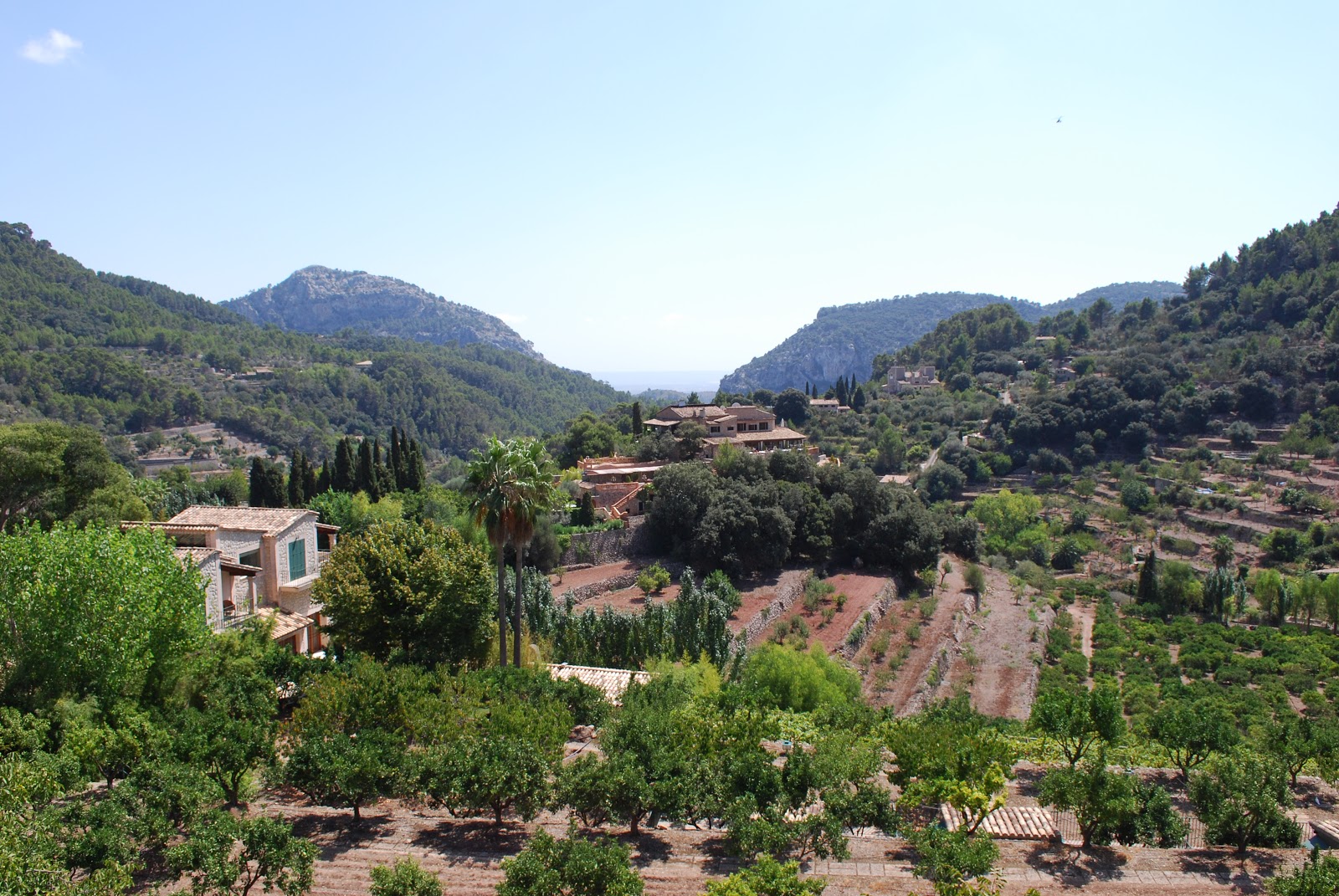
On a recent holiday to Mallorca we drove through the beautiful Serra de Tramuntana mountain range, which is now a protected UNESCO natural heritage site. The mountains run from the south west to the north east coast of the island and the landscape is a mixture of olive and almond trees, native Mediterranean holm-oak (good for making wine casks) and pine forests.  The coastline along it is typically rugged, with steep cliffs and small coves framing crystal clear turquoise waters.

Although we didn’t see any on our trip, (we were more interested in negotiating the hairpin bends at the time!) the mountains are home to the Black Vulture, one of the world’s largest flying birds. They soar majestically across the thermal up currents for hours on end with barely a beat of their impressive broad, square wings. Twenty years ago only a handful of pairs were known to exist on the island, but now thanks to the efforts of the Black Vulture Conservation Foundation the population has reached over one hundred individuals in total.

Not quite so impressive, but nevertheless I think still worth mentioning, are the goats, rabbits and sheep that graze on the mountain side, and the pine marten and weasels which scurry about their business amongst the pine forests.

After a lot of twisting and turning, we eventually ended up in the sleepy village of Valldemossa, hidden away in a peaceful valley. With its neatly terraced mountainside, traditional architecture and narrow cobbled streets festooned with festival bunting it was well worth the journey.

The musician, Frederick Chopin, and his lover the French novelist George Sands famously stayed in the village in the winter of 1838; they took up residency in one of the cells of the old Carthusian monastery. In her book, ‘A Winter in Majorca’, Sands writes about the beauty of the landscape and the natural surroundings:

“It lies in the lap of the mountains, the houses perch, like a cluster of sea-swallows nests in an almost inaccessible spot. It is one of those views which completely overwhelm one, for it leaves nothing to be desired and nothing to the imagination. All that a poet or painter might dream of, nature has created here".

Later in the day, as we headed north towards the port and old town of Soller and a tram ride through the orange and lemon groves, we promised ourselves that one day we would return to this poetic paradise.